How to choose the right handbag size for the way you use it
Knowing how to choose the right bag size solves one of the most common doubts when shopping online. A photograph can distort our sense of scale, so the decision should start with real measurements, what you carry every day and how you want to use the piece.
Start with what you normally carry
Empty the bag you use today and separate the essentials from the things you have simply accumulated. A phone, wallet, keys and glasses require far less space than a diary, bottle, pouch, documents or laptop.
The ideal capacity is not the maximum possible. A bag that is too large often ends up carrying too much and can lose proportion when it is almost empty.
Compare real measurements
On a product page, check width, height and depth. Take a tape measure and compare those dimensions with a bag you already own. This physical reference is much more reliable than trying to estimate scale from a model in a photograph.
Also look at the opening. Two bags with similar volume can offer very different access if one has a narrow opening or a more enclosed structure.
Small bag: for the essentials
Compact formats work well when you want freedom of movement and carry only basic items. They are useful for the city, dinners, travel or days when you do not need documents or bulky objects.
The advantage is lightness; the limitation is obvious: one extra item can quickly affect organisation.
Medium bag: the most versatile balance
For many people, a medium format is the easiest to use every day. It carries the essentials and a few additional items without the presence or potential weight of a large shopper.
If it combines a short handle with a long strap, it can adapt to very different settings.
Large bag: capacity with purpose
A roomy tote or shopper makes sense when you carry a laptop, documents, light clothing or work items. In these cases, pay particular attention to the structure of the base, the handles and the attachment points.
Empty weight becomes especially important: even a small difference is noticeable once you add everything you carry during the day.
Visual proportion matters too
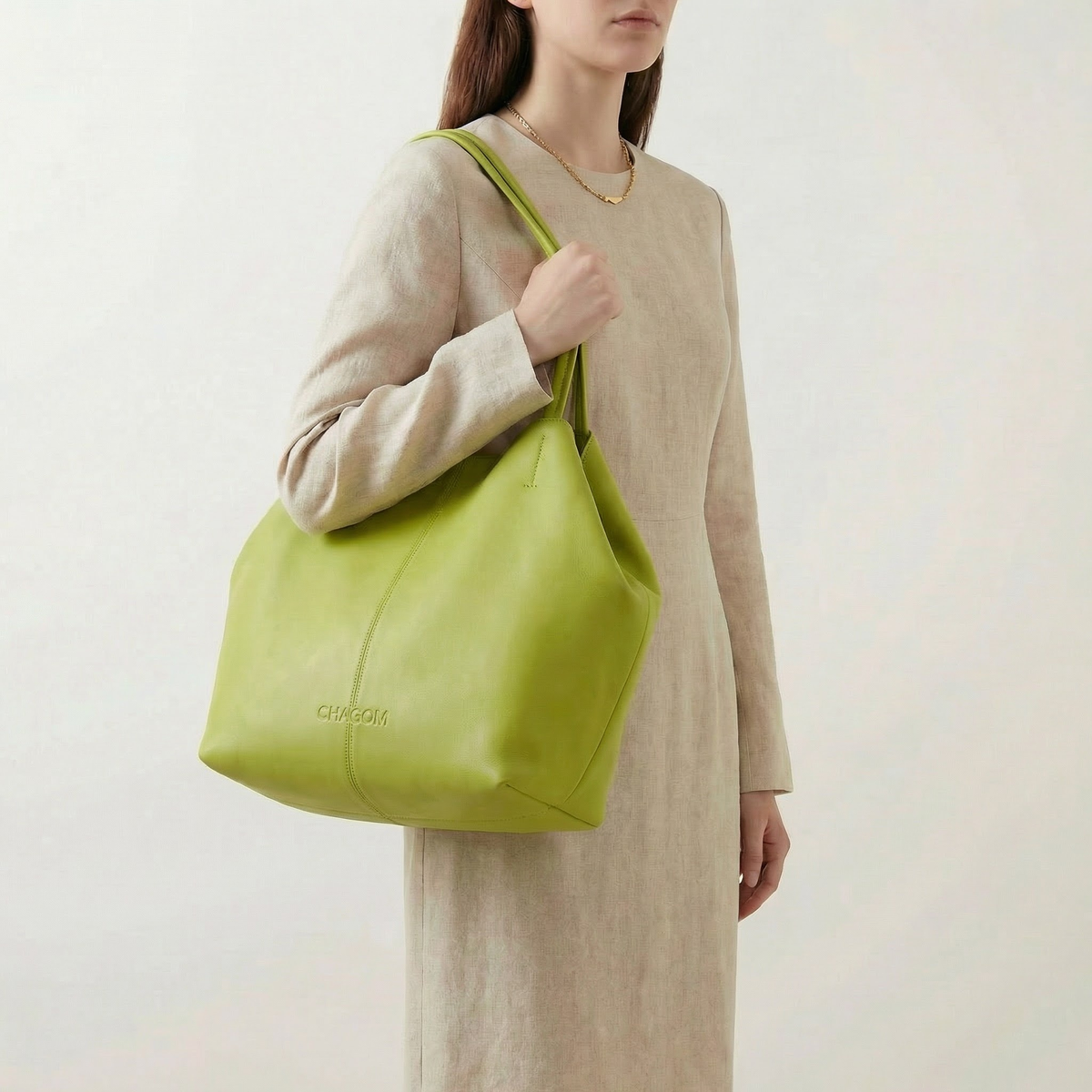
There is no rule that says bag size must correspond to a person's height, but it is worth thinking about the effect you want. A larger bag has more visual presence; a smaller one sits more discreetly within an outfit. What matters is that the proportion fits your style and the real function of the piece.
Depth and base: the forgotten measurements
Many purchases are decided by looking only at width and height. Yet depth determines much of the capacity and also how far the bag projects from the body. A deep base can hold more, but can make a crossbody less comfortable if it protrudes too much.
Think about how you will carry it
Dimensions should not be considered separately from handles and straps. Check handle drop, adjustable strap length and how the bag sits against the body. In winter, a crossbody that works perfectly over a shirt may need additional length over a coat.
Choosing well means using it more
A good size is one that covers most of your days without forcing you to fill unnecessary space. If you are deciding between formats, read our comparison of tote and crossbody bags and our guide to choosing an everyday bag.
Compare formats and measurements in the CHAGOM leather bag collection, designed and made in Ubrique.