What it really means for a bag to be made in Ubrique
Saying that a bag is made in Ubrique should mean more than a marketing phrase. Ubrique, in the mountains of Cádiz, concentrates a leathercraft culture built over generations and a network of specialist trades around working with leather.
A place specialised in leathercraft
Making a bag involves many different operations: interpreting the design, pattern making, selecting materials, cutting, skiving, preparation, assembly, stitching, edge finishing, fitting hardware and final inspection. In Ubrique there is specialist knowledge in each of these stages.
This means that apparently small decisions—a thickness, a reinforcement, the distance of a seam or the way an edge is prepared—can be resolved with the behaviour of the finished piece in mind.
Pattern making determines much of the result
Before stitching, there is a stage the customer almost never sees: translating the design into pieces that can be cut and assembled with precision. A good pattern defines proportions, tolerances, joins and volumes. When this foundation is resolved well, the bag holds its shape better and the different parts work together.
Cutting is more than following a line
Leather is a natural material and does not behave exactly the same across its entire surface. The cutter must interpret direction, elasticity, texture and possible variations to decide where each piece should be placed. That judgement affects both the appearance and the behaviour of the bag.
Preparing the leather before assembly
Many areas need to be skived or reinforced before assembly. A folded edge, a handle or a join do not necessarily require the same thickness. Preparation aims to achieve a result that is both clean and durable.
Stitching, edges and hardware
The regularity of a seam is visible, but behind it are machine adjustments, prior preparation and manual experience. Edges require several operations to achieve an even surface. Hardware must be aligned and correctly fitted because some components carry continuous tension.
Made in Ubrique does not mean every bag is the same
The place of manufacture brings knowledge and specialisation, but final quality also depends on the design, materials, intended construction and the level of standards set by each brand. Origin should therefore be accompanied by specific information about the product.
CHAGOM and Ubrique
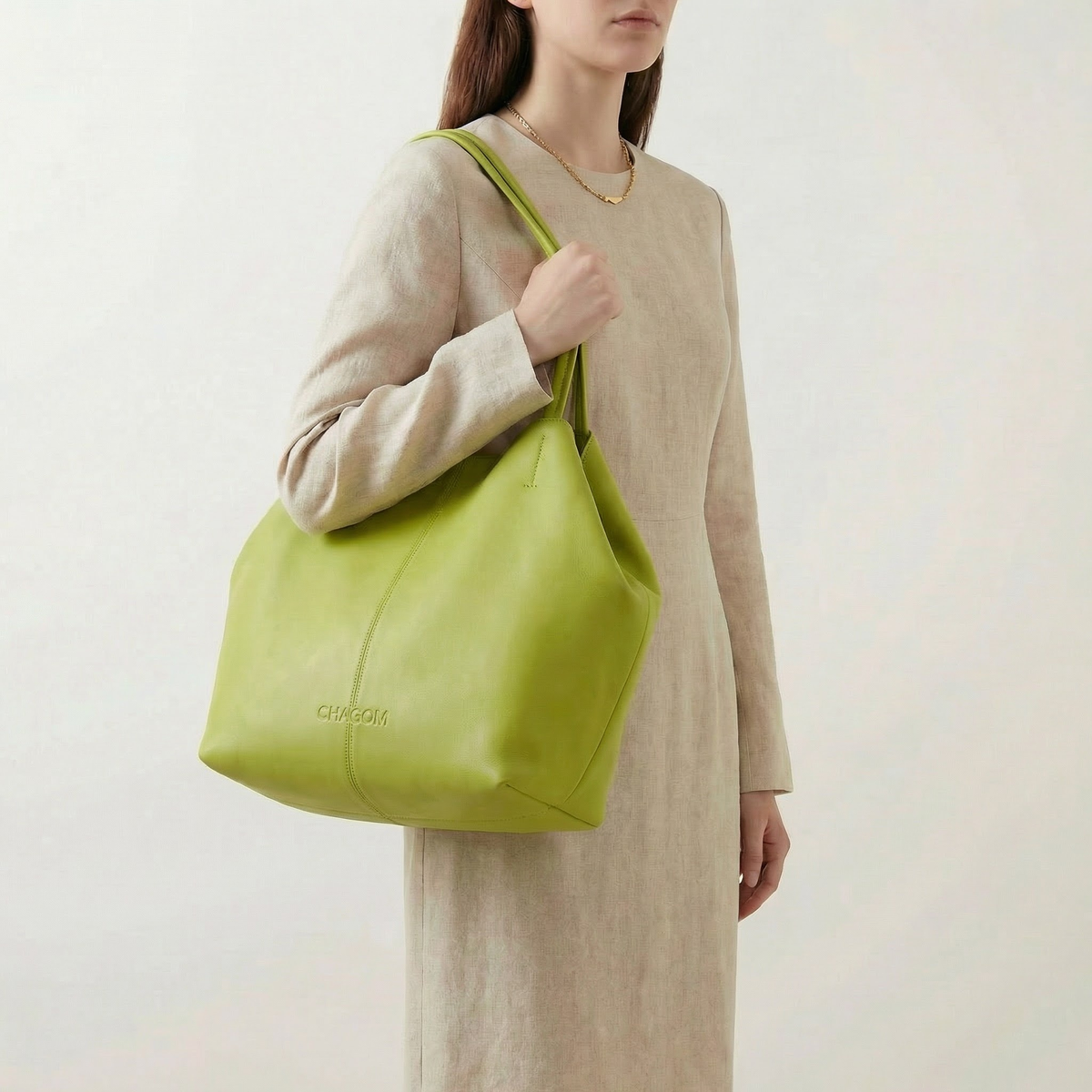
CHAGOM was born and works from this environment. Our models are designed with a contemporary perspective and are developed and made using local leathercraft knowledge. We do not want to use Ubrique as a decorative label, but to explain the process behind every piece.
Learn more about our work on Made in Ubrique and about the brand on Our story. To learn how to assess a piece more closely, see also how to recognise well-made artisanal leathercraft.