How to recognise a well-made piece of artisanal leathercraft
Craftsmanship in leather goods is not defined by a single characteristic. It is perceived in the sum of decisions that make a piece work, preserve its proportions and feel carefully finished both from a distance and up close.
From Ubrique, where leather goods manufacturing is part of a culture of craft built over generations, there are certain details we learn to look at almost automatically.
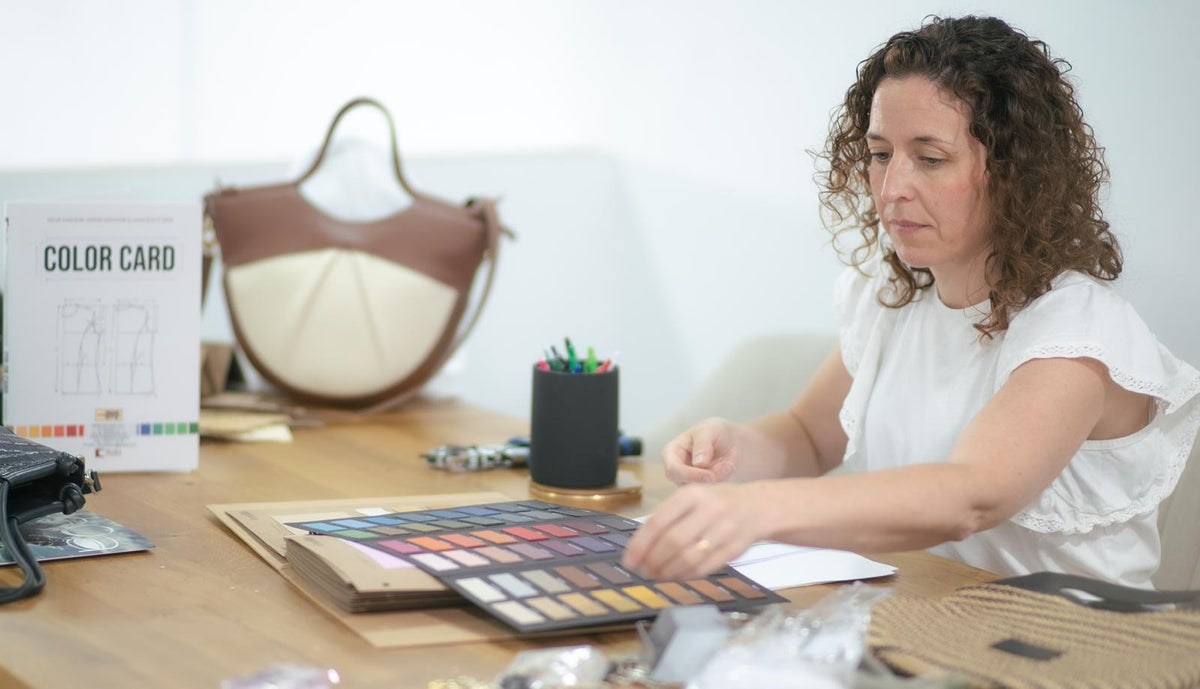
The leather should suit the design
There is no single leather that is right for every bag. A structured piece needs different behaviour from a more flexible bag. Quality therefore cannot be judged by feel alone, but by the relationship between material, construction and function.
As a natural material, leather can show slight variations. What matters is that the selection is coherent and that the material responds to the shape intended by the design.
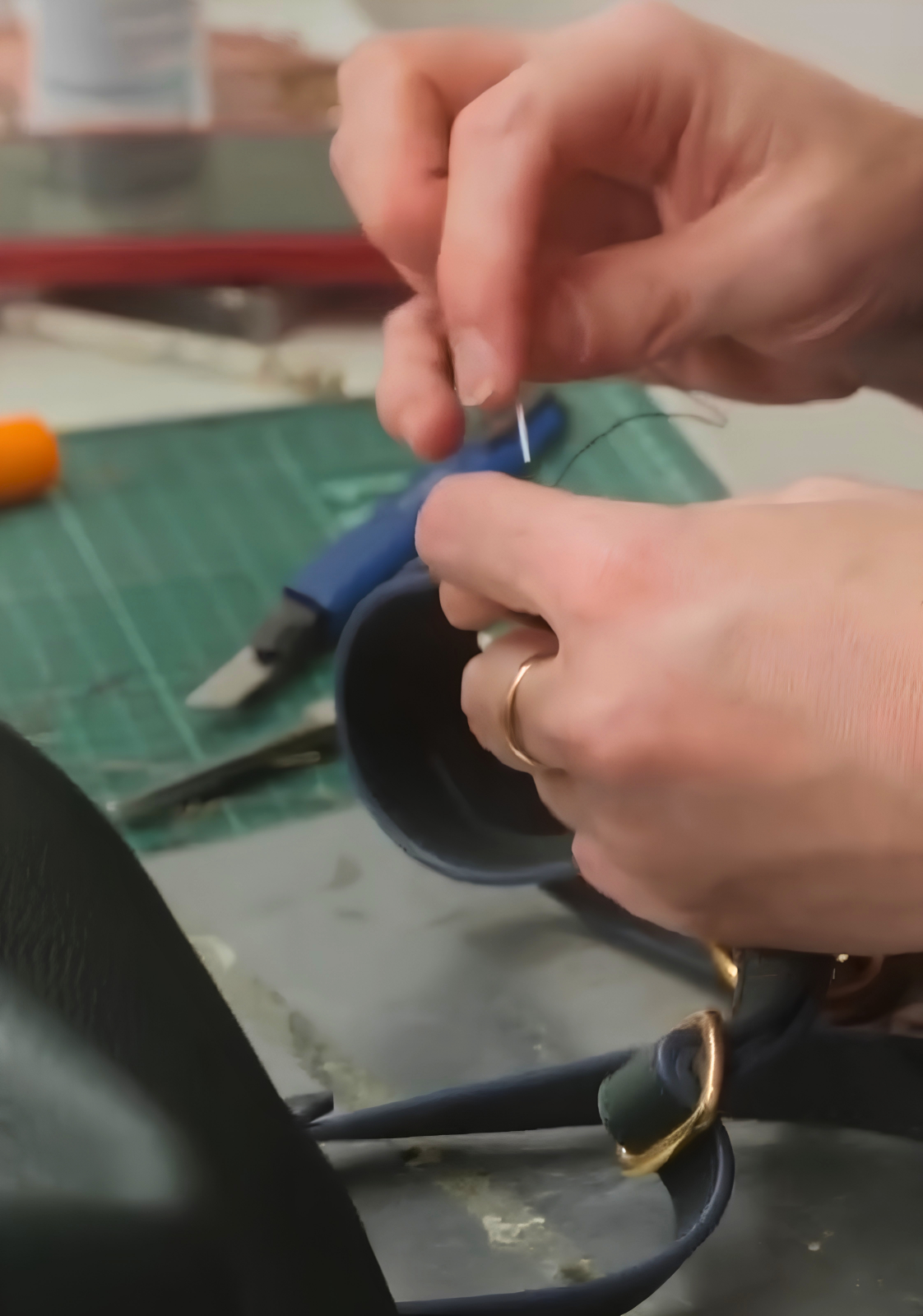
Regular, well-resolved stitching
Stitching helps construct the bag and also forms part of its appearance. Pay particular attention to corners, handle attachments and areas under tension. Regularity, distance from the edge and clean finishing say a great deal about the care invested in making the piece.
Edges are a good test of finishing
On handles, straps and pieces with visible edges, the edge finish offers a clear view of the quality of the work. Depending on the design, edges may be folded, stitched or finished in another way; what matters is that the result is clean and coherent with the rest of the piece.
Hardware should work with the product
A closure or snap hook should not be chosen only for its appearance. It should operate smoothly, be correctly proportioned and be properly integrated into the construction. In a good bag, every element serves a purpose without looking as though it was added at the last minute.
Structure should also be assessed in motion
A bag is not a static object. It opens, closes, carries weight and is worn on the shoulder or in the hand. A well-resolved construction therefore needs to make sense in use.
On a shopper, for example, weight distribution and handle behaviour matter. On a crossbody bag, the position of the attachment points influences how the piece hangs. Every format has different requirements.
Ubrique and knowledge of the craft
The value of making in Ubrique is not simply the ability to mention a place of origin. It lies in the concentration of technical knowledge, suppliers, workshops and specialist professionals surrounding leathercraft.
At CHAGOM, that environment is part of the brand’s origin. Learn more about our relationship with the craft on Made in Ubrique and Our story.
Do not look for perfection without context
An artisanal piece does not have to look machine-made to be well made. Nor should every irregularity be turned into a virtue. What is worth looking for is coherence: good materials, precise construction, careful finishing and a clear design intention.
When all these elements work together, the result reveals itself in use and does not need to depend on a logo to communicate quality.