Work bag for women: how to choose one that is comfortable and functional
A work bag stays with us for far more hours than it may seem. It leaves home in the morning, goes through commutes, meetings, lunches and errands and often remains with us after the working day ends. Choosing a functional work bag for women is therefore not only about finding an attractive design: it needs to perform well in everyday use without losing presence.
Start with what you really carry
Before thinking about silhouette, make a list of what you regularly take with you. If it is only a phone, wallet, keys, glasses and a small pouch, a medium format may be enough. If you need a diary, documents, water bottle or laptop, it makes sense to go larger and pay more attention to the base, opening and weight distribution.
Choosing a bag that is too large “just in case” usually has one consequence: it ends up being filled beyond what is necessary and becomes heavy. The objective is enough capacity without turning the bag into a burden.
Proportion matters as much as capacity
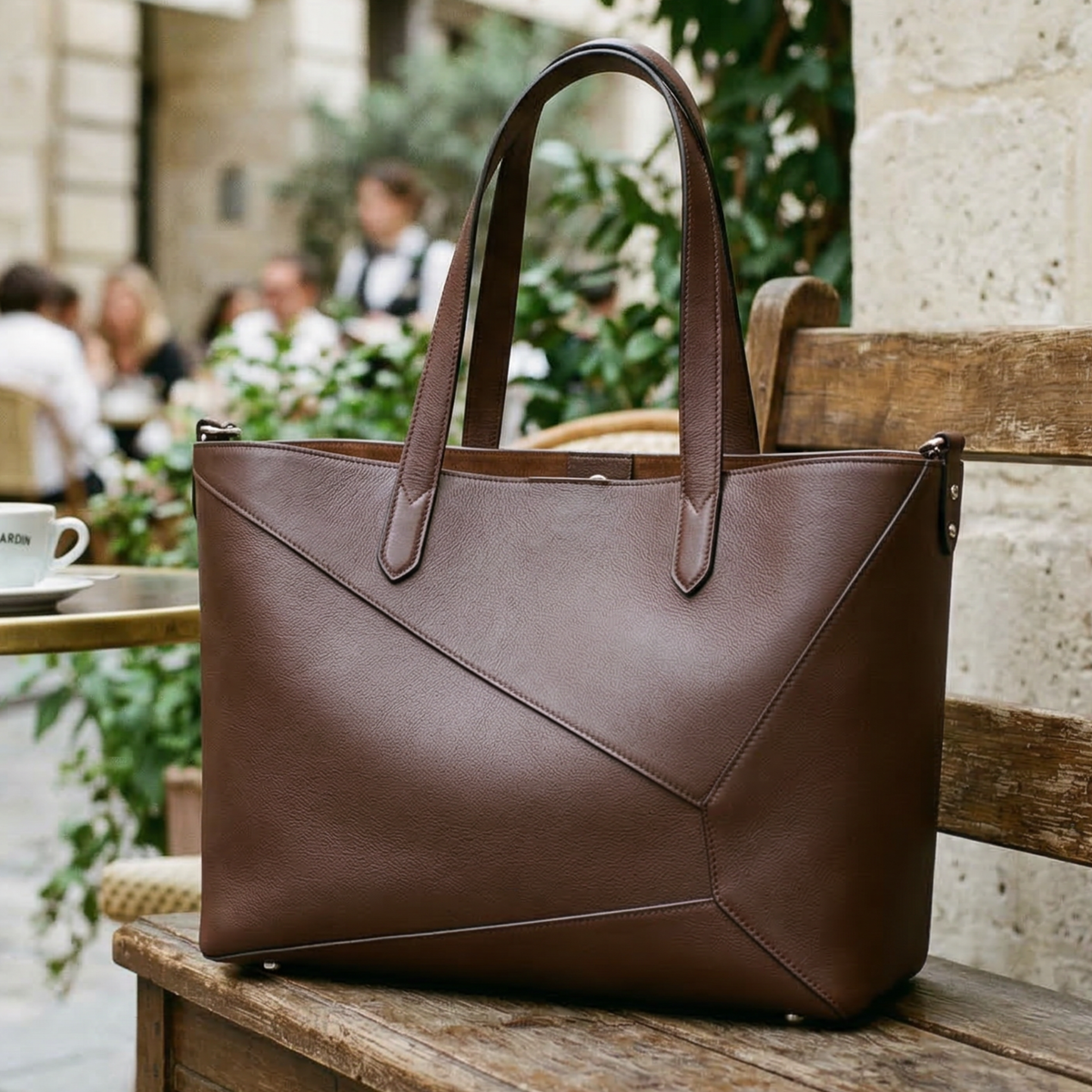
A good work bag should keep a balanced silhouette when full. A stable base helps distribute contents, while a sufficiently wide opening makes it easier to find what you need without emptying the bag. In structured models, points under tension—handles, attachments and joins—should also be properly reinforced.
Measurements on a product page are more reliable than a photograph. Compare length, height and depth with a bag you already use; that will tell you whether the new format fits your routine.
Comfortable handles and the option to free your hands
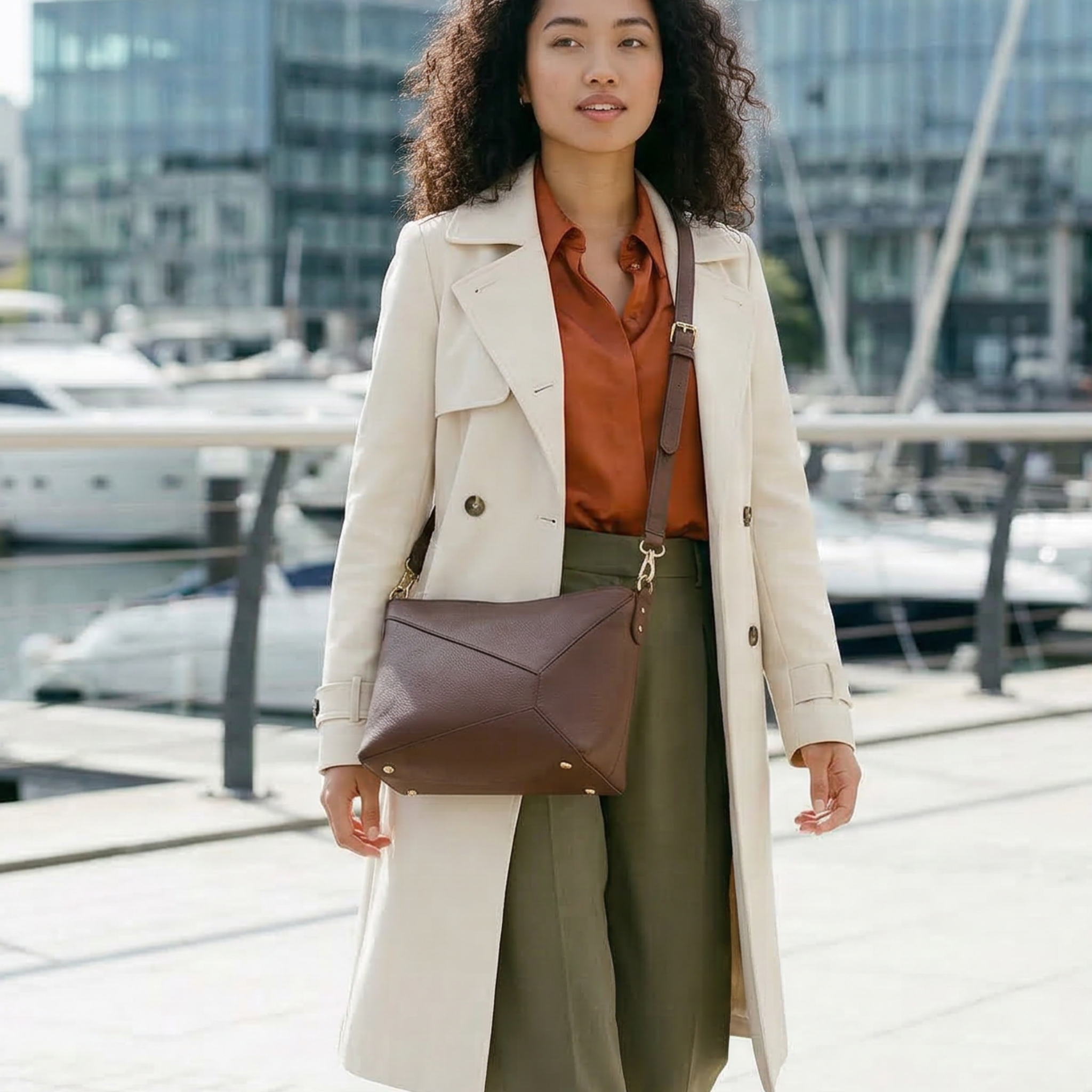
For long days, handle comfort is decisive. A very narrow handle may look elegant, but it needs to be proportionate to the weight it will carry. If you walk or use public transport, a long or detachable crossbody strap adds versatility and lets you alternate how you carry the bag.
It is also worth checking how the bag sits against the body. An adjustable strap makes it easier to adapt the bag to different clothing, especially in winter over coats.
Organisation without turning the interior into a maze
More compartments do not always mean more functionality. For professional use, a clear interior with enough main space and one or two well-positioned pockets for small items often works better. If you carry a laptop or documents, an area that keeps them organised helps prevent them from distorting the rest of the contents.
The closure also depends on your routine. A zip offers security when travelling; a magnetic closure provides quicker access and a cleaner aesthetic. What matters is that the system feels natural for the way you will use the bag.
Empty weight is a design decision
Genuine leather has presence and durability, but the bag should not already feel heavy before anything is added. Structure, reinforcements and hardware should provide stability without unnecessary bulk. A well-resolved design distributes weight and prevents one area from carrying all the tension.
An aesthetic that works beyond the office
If you want to use the same bag through much of the day, choose a line that works across different settings. Black, chocolate, taupe, tan or deep burgundy are easy to integrate, although a more distinctive colour can also work when the design is restrained.
Versatility does not mean absence of character. Balanced proportions, textured leather and discreet hardware can give identity without relying on short-lived decoration.
What to look for in the quality of making
When buying online, review close-up photographs of stitching, edges, handles, closures and joins. Stitching regularity, clean edges and the way pieces meet say a great deal about execution. In Ubrique, leathercraft draws on long technical specialisation in processes such as cutting, skiving, preparation, assembly, stitching and finishing.
A well-chosen work bag should support your routine for years, not merely look good on the first day. You can also read our guide to choosing an everyday bag or explore the CHAGOM leather bag collection.