Full-grain vs corrected-grain leather: what really changes in a bag
When reading the description of a leather bag, we often find terms that can look like an automatic quality ranking. “Full grain”, “corrected grain”, “natural leather” or “genuine leather” are widely used, but their meaning and effect on the finished piece are not always explained.
Understanding the difference between full-grain and corrected-grain leather helps us buy with better criteria. It is also important not to oversimplify: the surface type is only one part of a bag's quality. Tanning, hide selection, finishing, thickness, reinforcement and construction are equally decisive.
What is full-grain leather?
Full-grain leather retains the outer layer and its natural grain without removing it through intensive corrective sanding. The surface can show slight variations in tone, pores, wrinkles or natural marks from the animal. Not all full-grain leather looks the same: the finish applied afterwards may be very transparent or more covering.
One of its most valued characteristics is precisely that visible relationship with the original material. Depending on tanning and finishing, it may develop changes in tone and a distinctive patina over time. But “full grain” does not necessarily mean an unfinished surface or that every natural mark must remain visible.
What does corrected-grain leather mean?
With corrected-grain leather, the surface is worked to reduce irregularities and achieve a more uniform appearance. This can include sanding or polishing the upper layer, followed by finishes, pigments or embossing that visually rebuild or regularise the grain.
Corrected-grain leather is still leather when it comes from animal hide; it should not automatically be confused with synthetic materials. Its main aesthetic advantage is uniformity. Depending on the finish, it can also provide a more protected surface against certain stains or minor signs of use.
There are also many degrees of correction. A light intervention that preserves much of the character of the hide is very different from a heavily covered, standardised surface. Two materials both described as corrected grain can therefore behave quite differently.
Is full grain always better?
Not necessarily for every use. Full grain is often valued for its feel, visual depth and ability to show the natural character of the material. But the leather still has to be right for the design of the bag.
A highly structured silhouette may require different thickness, firmness and finishing from a soft bag. A piece intended for intensive use may benefit from greater surface protection. Even within the same hide, the area used and the direction of the fibres can influence stability.
A more useful question than simply “is it full grain?” is “why was this leather chosen for this bag, and how is the piece constructed?”
The finish changes behaviour considerably
The finish is the set of treatments that defines much of the appearance and surface protection. It can provide colour, shine, feel, abrasion resistance or uniformity. A full-grain leather with a pigmented finish may look more regular than one with an aniline or semi-aniline finish, while corrected-grain leather can still feel excellent when the finishing work is well done.
This is why judging quality from a photograph alone is difficult. Images can help us appreciate grain and texture, but real behaviour also depends on elements that are not always visible.
What about the term “genuine leather”?
“Genuine leather” is a very broad expression. It generally indicates that the material contains or comes from leather, but on its own it does not describe the layer used, level of correction, tanning process or selection quality. It should not be treated as a sufficient technical category for comparing two bags.
When a product page gives clear information about leather type, finish and place of manufacture, we can assess the piece with more context. In our guide to choosing a leather bag online, we explain other information worth checking.
How to assess leather in a finished bag
Beyond the commercial name of the material, look at how it has been used. A good piece should show coherence between leather and construction. Pay attention to how moving areas flex, the regularity of pieces that should be symmetrical, behaviour around seams and folds, and the way edges are finished.
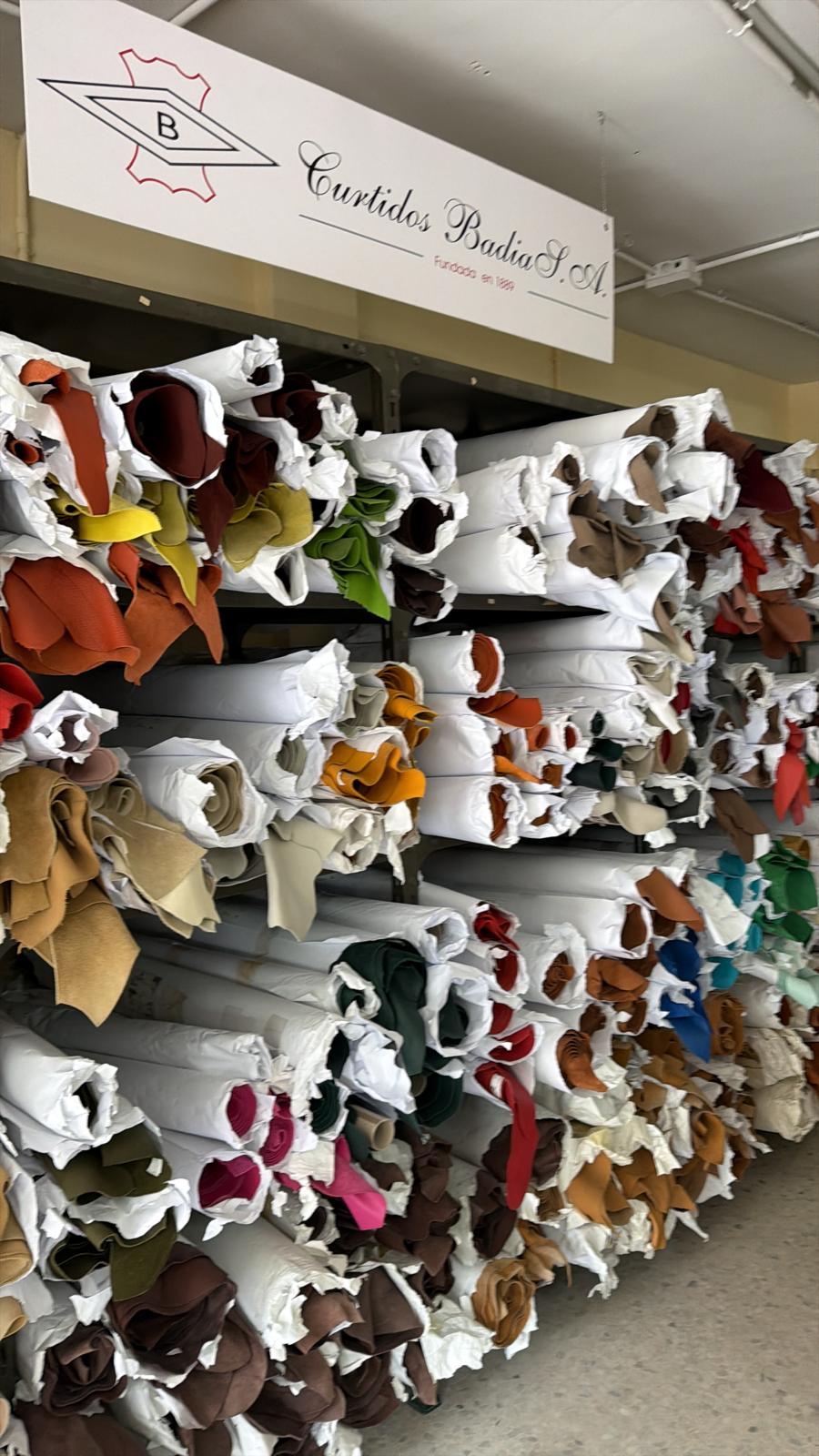
In artisanal leathercraft, selection also matters: different areas of the same hide behave differently, and cutting must take into account where the bag needs greater firmness, visual continuity or flexibility. This work is part of leathercraft even when it is not immediately visible.
Final quality is the sum of many decisions
An excellent material does not automatically make a good bag. Likewise, corrected-grain leather does not automatically mean low quality. The result depends on how material, pattern making, reinforcement, stitching, hardware, finishing and assembly work together.
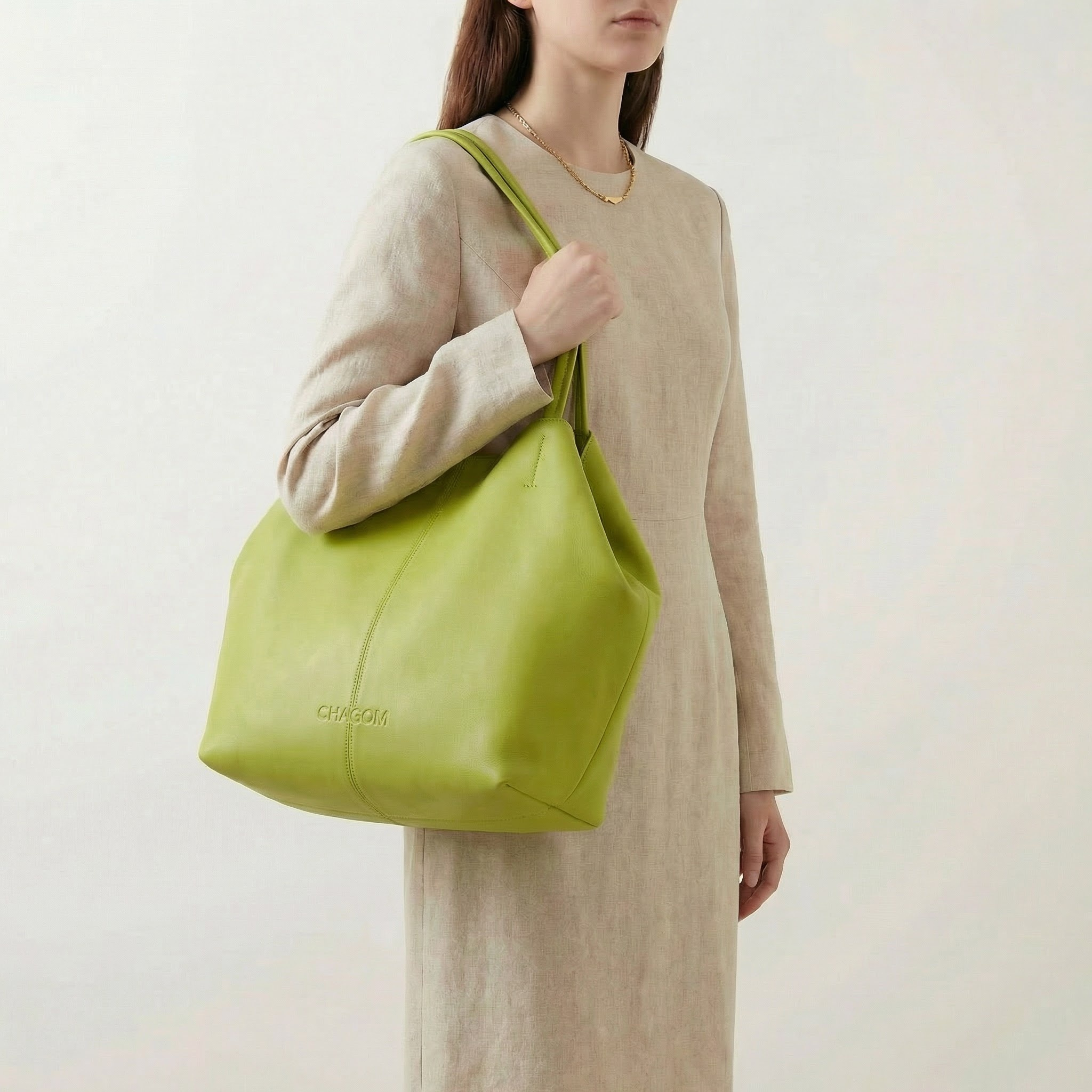
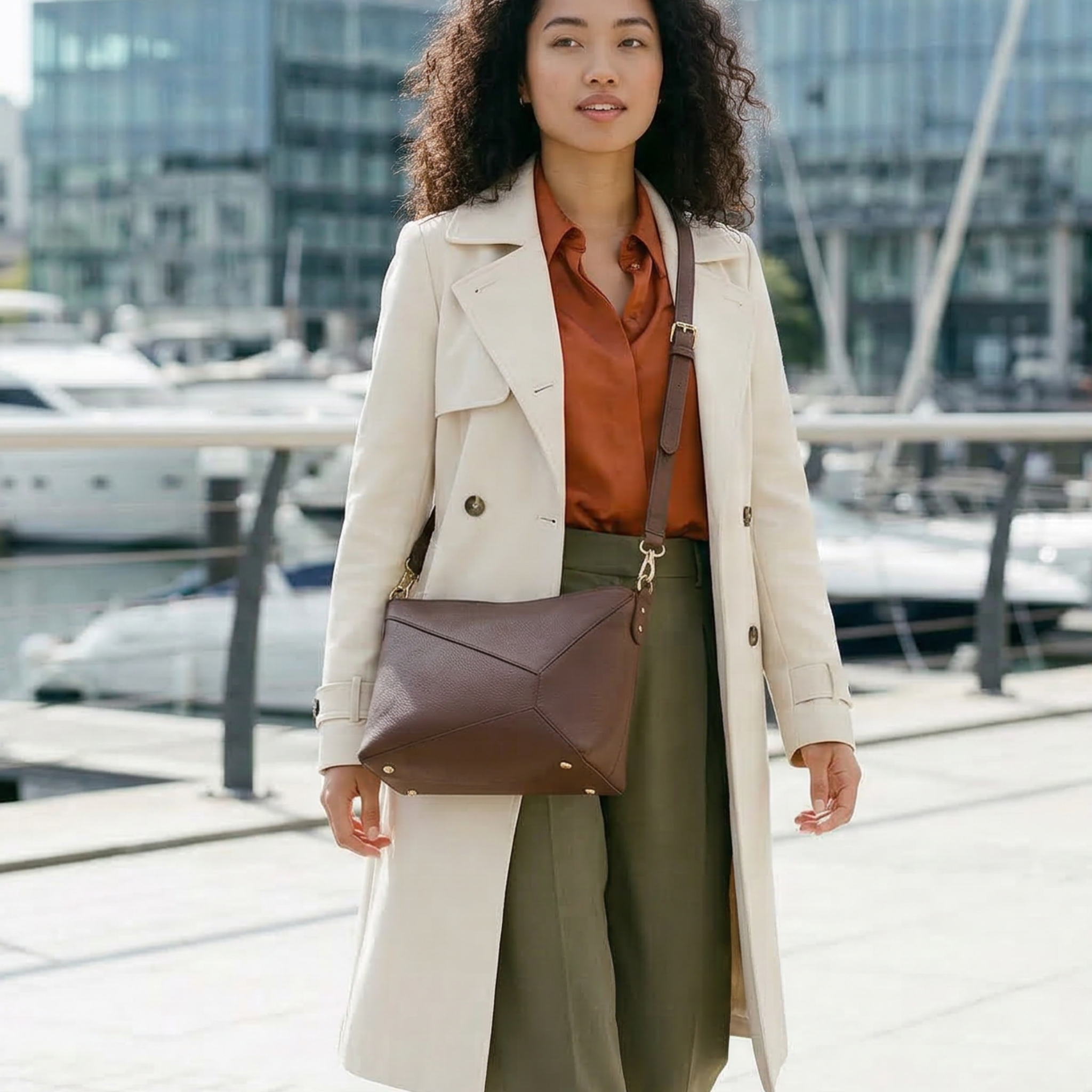
At CHAGOM, leather selection starts from the design and the behaviour we want from each model, rather than from using a single label as a quality claim. Our work is carried out in Ubrique, where material selection and preparation are part of the leathercraft process. Learn more on Made in Ubrique and explore different finishes and silhouettes in our leather bag collection.