What is a hobo bag? Shape, leather and how to choose one
A hobo bag usually has a relaxed silhouette that curves or drapes softly when worn on the shoulder. It is appreciated for its natural-looking shape, but not every flexible bag is a hobo and not all hobo bags have the same capacity or construction.
To choose one, look beyond its outline: leather, pattern making, drape, handle drop, opening and weight distribution determine how it behaves in use.
What exactly is a hobo bag?
A hobo is typically a shoulder bag with a flexible body and rounded contours, sometimes forming a gentle crescent through its own volume and the tension of its handle. It tends to look less rigid than a structured bag. However, the commercial term does not refer to one compulsory pattern or size; hobo bags may be compact, large or slightly reinforced.
What matters is how the body, base, sides and handle interact when the bag is filled, not simply whether the material feels soft.
Hobo, crescent and crossbody bags: the differences
| Style | Defining feature | What to check |
|---|---|---|
| Hobo | Usually a relaxed shoulder silhouette with flexible volume and drape | Drape when filled, opening and handle comfort |
| Crescent | A curved or arched outline defines its appearance | Opening width, usable base and internal space |
| Crossbody | A carrying method using a long, often adjustable strap | Strap length, attachment points and fit |
These categories can overlap. A crescent bag can have a crossbody strap, and a hobo can have an additional long strap. Silhouette and carrying method are not the same thing.
Why leather changes the drape of a hobo
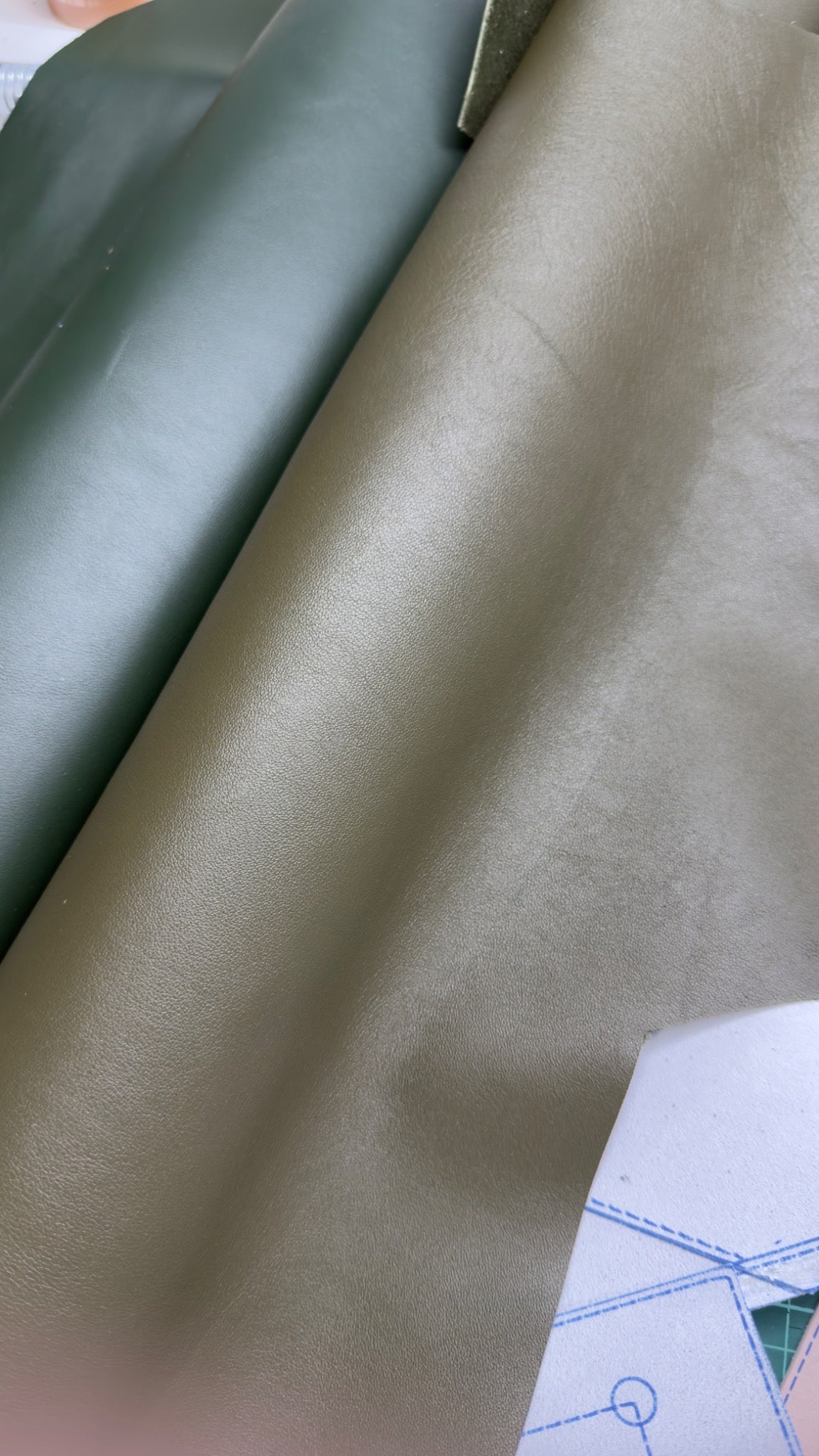
Two leathers that look alike can behave differently with the same pattern. Thickness, flexibility, fibre structure, finish, lining and reinforcement all contribute. Firmer leather tends to hold more volume; softer leather may fold and adapt to the contents.
Softness alone does not prove quality, nor does firm leather imply discomfort. The material must match the intended design and its desired drape.
The role of pattern making
Curves, seams, base depth and handle attachment positions determine how the bag develops volume after assembly. In flexible designs, controlling excess material and seam tension helps avoid unintended creases. Lining, reinforcement, closure and hardware weight also influence the result.
A bag that looks fluid when empty can feel different when loaded. Testing with ordinary contents reveals more than a straight-on product photograph.
How to choose a comfortable hobo bag for everyday use
- Check handle drop: it should fit over your shoulder with your usual jacket or coat.
- Check the opening: a roomy body can still have a narrow opening that limits access.
- Consider empty weight: daily objects add up on the shoulder.
- Look at the base and corners: a defined base supports organisation differently from a fully flexible one.
- Review closure and pockets: convenience and security matter on public transport.
- Think about how it will age: load, use and storage can alter its drape over time.
Should you choose a small or large hobo?
Compact versions may hold a phone, keys and wallet; larger ones can accommodate more but encourage overpacking. Check the opening and usable interior, not only external measurements. Compare small, medium and large leather bags, as well as our size guide.
Flexible and curved shapes at CHAGOM
CHAGOM works with different silhouettes. These examples illustrate pattern making; they are not all classified as hobo bags.

PLIEGUE illustrates how a carefully patterned pleat creates movement and flexible volume. LUNA has a more defined crescent outline. VELA 26 offers another flexible shape with an adjustable strap and central pleat.
If you want to wear your bag across the body, explore crossbody bags and our strap and closure guide.
How to preserve a flexible bag’s shape
Avoid overloading it or leaving it hanging with weight inside for long periods. Store it clean and dry with soft, unprinted material gently supporting the body, without compressing its pleats. Follow the finish-specific care advice in our smooth leather care guide.
Frequently asked questions
Must a hobo bag use very soft leather?
Not necessarily. A relaxed drape is common, but some designs are more structured thanks to their materials and reinforcements.
Are hobo and crescent bags the same?
Not always. Crescent refers primarily to the curved outline; hobo usually describes a more relaxed shape and drape.
Can I wear a hobo crossbody?
Only if it has a sufficiently long strap and appropriate attachments. The hobo label does not guarantee this.
Can a hobo bag work for the office?
Yes, if its opening, base, pockets and weight suit what you carry. Measure the usable interior if transporting a laptop or rigid objects.
CHAGOM designs and makes its bags in Ubrique, Spain, balancing form, materials and practical use. Discover our leather bag collection.